Do you need consent to record a therapy session?
Yes, and it isn't optional. Professional ethics codes require it directly: the APA Ethics Code says psychologists obtain permission from all persons before recording their voices or images (Standard 4.03), and the ACA Code of Ethics requires counselors to get client permission before recording sessions (Section B.6.c). Recording consent is separate from consenting to treatment.
State wiretap law sits on top of the ethics rules. Most US states let one party consent to recording a conversation, but about a dozen require every party's consent (Reporters Committee, 2012) – among them California, Florida, Illinois, Pennsylvania, and Washington. A therapy room usually has two parties. In an all-party state, you need the client's clear yes on the record, not just your own.
Capture the consent in the recording itself, the way you would timestamp any agreement. Informed consent for the therapy is already required separately (APA Standard 3.10); permission to record is an additional yes on top of it. For a minor or a client with a guardian, you need the legal representative's permission too. We can't give legal advice – when your state or your board's rules are unclear, ask before the session starts.
How to transcribe a therapy session with an AI first pass
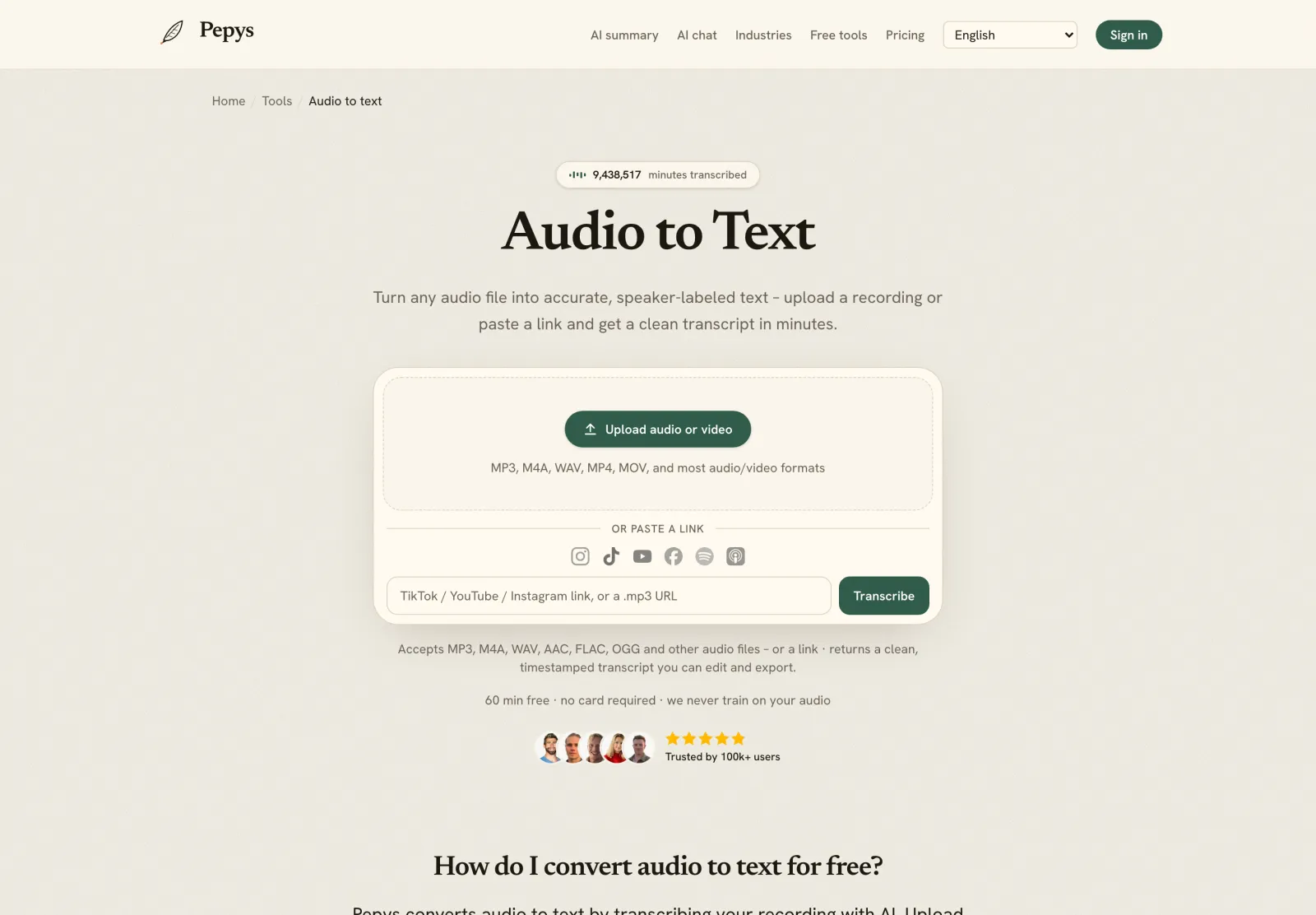
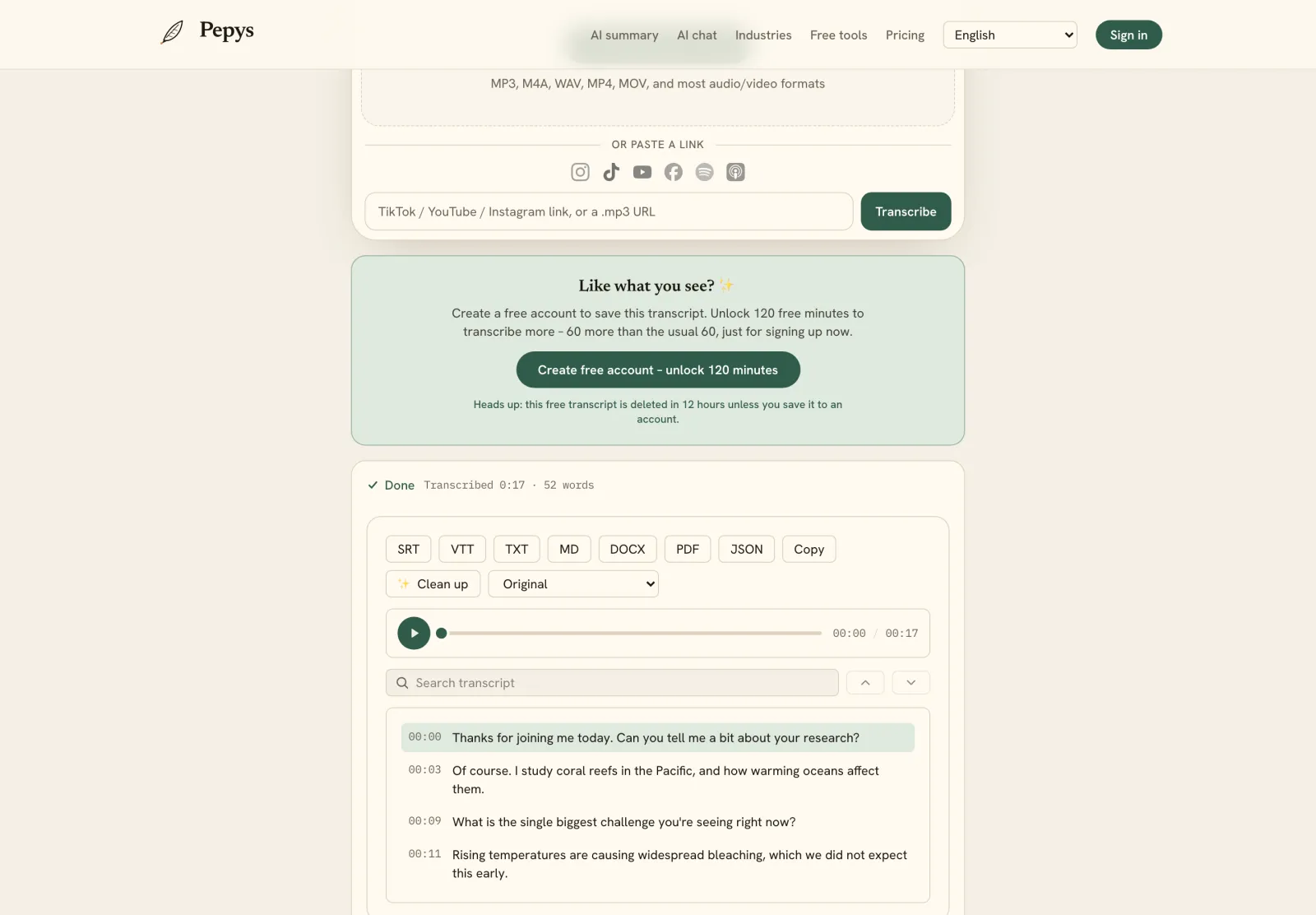
Typing a session transcript by hand is the slow path. Manual transcription can take up to six hours of work for one hour of audio (Haberl et al., 2023, citing Bell et al. 2018) – most of a clinical day spent on a single 50-minute session. An AI first pass turns that into minutes of processing plus a focused review, so you're editing, not retyping.
This isn't a bot that joins the session. You're not putting a live meeting-notes assistant in the room between you and a client; you record the session yourself, then upload your own file when you're ready. That keeps the tool out of the therapeutic space and leaves you in control of what gets processed. The base workflow – record, AI first pass, then manual cleanup – is the same one covered in how to transcribe an interview. A session just adds stricter consent and privacy steps around it.
Where the machine still needs a human: names, medication and diagnostic terms, and the moments where therapist and client talk over each other. Those are exactly the passages that carry clinical weight, so spend your review time there. If a stretch is genuinely inaudible, bracket it with its timestamp rather than guessing at what a client said.
How do you keep a therapy transcript private?
Treat the recording as sensitive from the moment you hit stop. Two controls matter most: use a tool that doesn't train AI on your files and deletes them on a known schedule, and de-identify the transcript before it travels anywhere. Removing a name isn't enough – a 5-digit ZIP, gender, and date of birth uniquely identify roughly 87% of Americans (Sweeney, 2000).
Work from an established checklist rather than eyeballing it. HIPAA's Safe Harbor method lists 18 categories of identifiers to remove (45 CFR 164.514), from names through to any other unique code, and it's a solid baseline for a session transcript. The full de-identification pass is its own job. You strip the direct identifiers, then generalize the quasi-identifiers that still single someone out – covered step by step in how to anonymize a transcript. Sweeney's figure was later recomputed at about 63% on 2000 census data (Golle, 2006), but either way, combined details re-identify people.
Where the audio and transcript live matters more here than almost anywhere. Pepys never trains on your audio or text, requires an account before provider-backed transcription starts, and auto-deletes source media 30 days after upload by default. That said, identifiable session audio is protected health information if you're a covered entity, and we can't give you compliance advice. You're responsible for knowing what your obligations require before you upload.
How do you get an accurate two-speaker transcript?
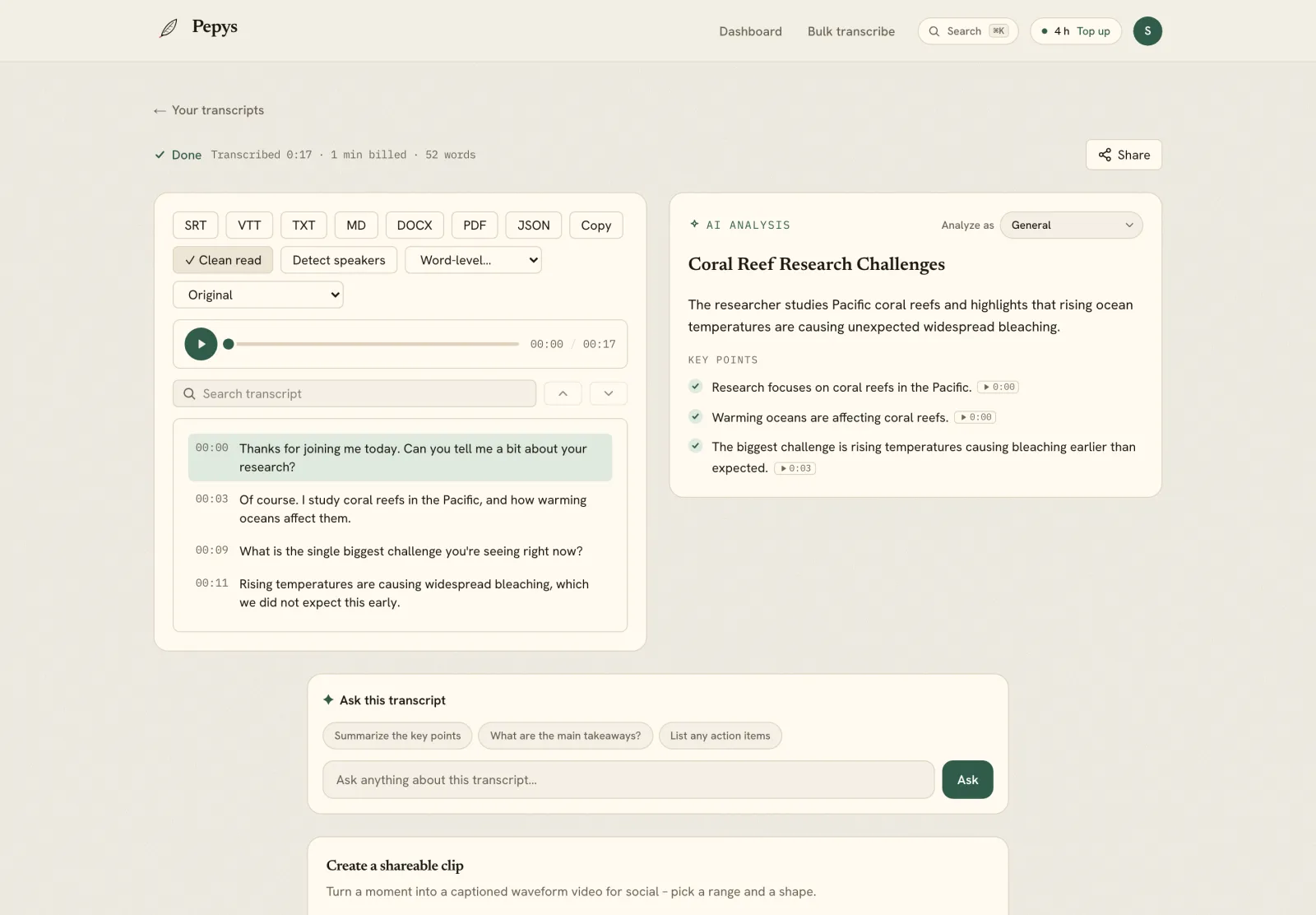
A therapy session is a two-speaker recording, and keeping the two straight is half the value. A therapist-and-client two-speaker labeling job separates who said what, so a supervisor, or you a week later, can follow the exchange without re-listening. Record so the voices stay separable: use two mics, or a room where you aren't talking over each other. The labels come out cleaner.
Decide your transcription style before you edit, because in clinical and research use it shapes the analysis, not just readability. Transcription is an act of representation that affects how participants are understood and the conclusions drawn (Oliver, Serovich & Mason, 2005). Strict verbatim keeps every pause, 'um,' and false start, which you want when how something was said is the clinical point. Clean verbatim drops filler but keeps the client's actual words.
If the recording is data for psychotherapy process research, don't invent your own formatting. Standardized transcription guidelines exist precisely because collaborative research is hindered by the lack of them (Mergenthaler & Stinson, 1992). When session tapes feed a coding workflow, the transcript is analysis data, and qualitative research transcription covers how it fits the coding step. Match the standard your method or your supervisor expects.
Progress notes, supervision, and how long to keep the recording
Know which record you're creating. HIPAA draws a hard line: psychotherapy notes are the notes a provider records analyzing a counseling session, kept separate from the rest of the medical record (45 CFR 164.501). A transcript you build for your own process notes or supervision can sit in that separate category – but only if you actually keep it separate.
That separation carries a real benefit. A covered entity generally must obtain a separate patient authorization to use or disclose psychotherapy notes (45 CFR 164.508), with narrow exceptions. So a transcript used for your own supervision or training is handled differently from one going into the shared medical record. Decide the transcript's purpose up front, because it changes who can see it and under what agreement.
Retention is set by law and your board, not by habit. The APA Record Keeping Guidelines set a default that state law can override (APA, 2007). Hold records until 7 years after the last date of service for adults, or 3 years past a minor reaching majority, whichever is later. A session recording and its transcript are part of that record, so store the master somewhere access-controlled and delete working copies when they've done their job.