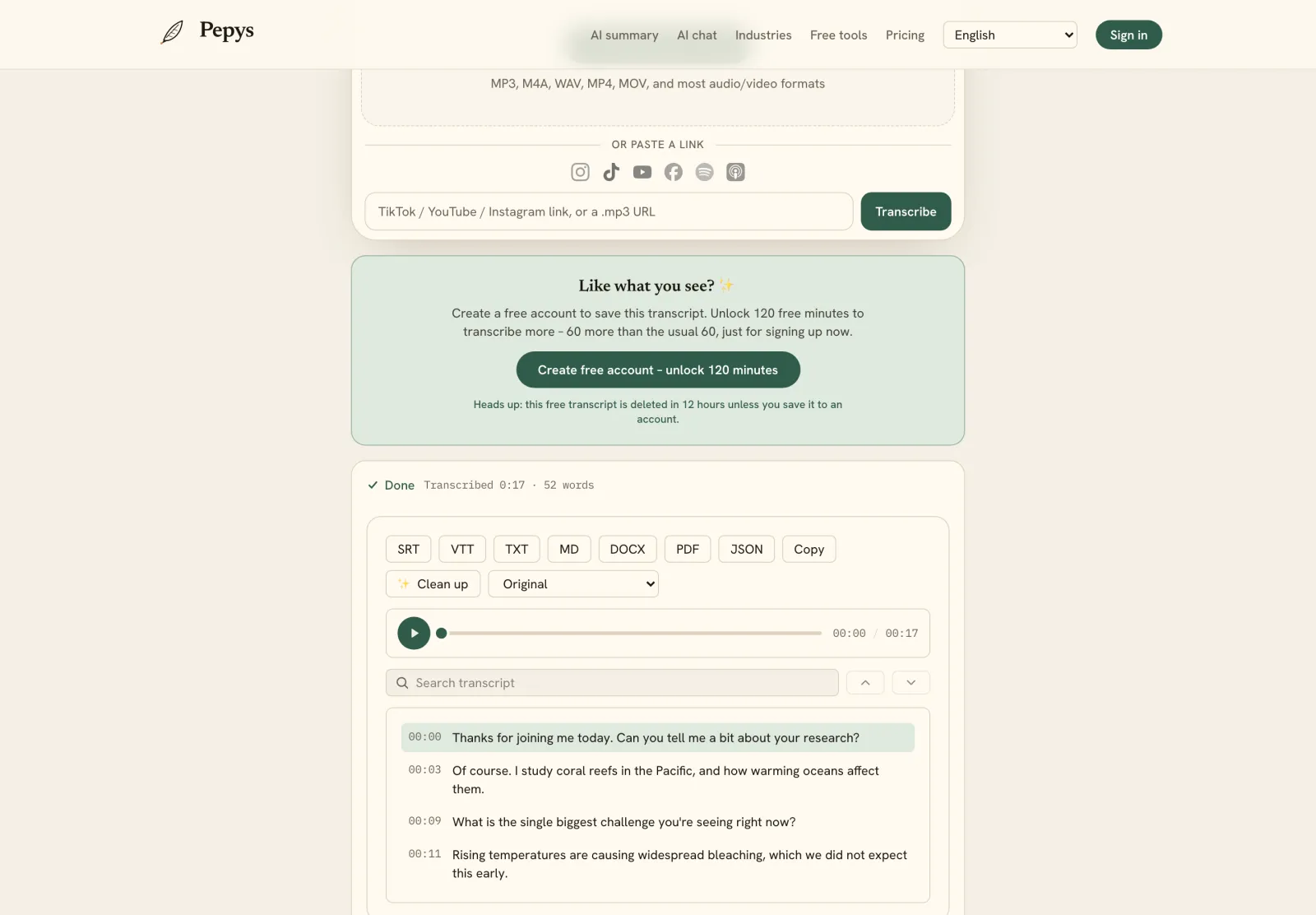
Why look for transcription without a subscription?
Subscription fatigue is measurable, not a mood. In a survey of 1,000 U.S. consumers, people estimated they spent $86 a month on subscriptions but actually spent $219 – a $133 gap (C+R Research, 2022). Transcription tools quietly join that stack, billing whether you use them or not.
The forgetting is the expensive part. In the same survey, 42% admitted they were still paying for a service they had stopped using, and 74% said recurring monthly charges were easy to lose track of (C+R Research, 2022). A transcription plan is easy to forget in the months between projects.
Wider dissatisfaction backs this up. Deloitte's 2025 Digital Media Trends found 47% of consumers feel they pay too much for the streaming services they use (Deloitte, 2025). In the same report, 41% said the content isn't worth the price. Transcription makes the mismatch sharper: research and journalism run in bursts, so a monthly plan charges you through every idle week you record nothing.
How do pay-per-file and per-minute services work?
You pay by the file or the audio minute, with no monthly commitment. Human services price this way: Rev charges $1.99 per minute of audio for professional transcription with a 99% accuracy guarantee (Rev, 2025). You pay for a job when it lands, then owe nothing until the next one.
Rates vary by provider and turnaround. GoTranscript prices human transcription from $1.02 per minute, all done by people rather than software (GoTranscript, 2025). The appeal is obvious for irregular volume: nothing sits idle on your card between projects, and one-off jobs stay one-off.
The catch is length. A two-hour interview at those rates runs from roughly $120 to $240, so long or frequent recordings add up fast. Usage-based AI transcription splits the difference: you still pay only for the minutes you run, but at machine speed rather than a per-minute human rate. Weigh AI vs human transcription on accuracy and cost, then match the method to the file. Certified human work suits records that may be challenged; AI suits interviews, lectures, and research.
Are one-time desktop apps like MacWhisper subscription-free?
Yes, and honestly so. MacWhisper is a one-time purchase at €64 per license with lifetime updates, no subscription attached (MacWhisper, 2026). Its Gumroad listing spells it out as "One Time Payment / No Subscription". You buy it once and own it.
The design is local-first. MacWhisper runs on-device so audio never leaves your Mac, which is genuinely strong for sensitive or confidential recordings. It's built on OpenAI's Whisper, released under the MIT License in 2022 – the open-source model that makes these one-time apps possible in the first place.
The constraint is the platform. MacWhisper is a Mac app, with an iPhone and iPad version that also transcribes on-device with no data leaving the machine (Apple App Store, 2026). If you're on Windows, a Chromebook, or Android, or you'd rather not install anything, a web-based option covers the same subscription-free need without the Apple requirement.
Where do pay-once credits fit?
Pay-once credits sit between per-minute jobs and monthly plans. Most named tools bill per seat on a recurring cycle: Otter's Pro plan is $16.99 per user each month (Otter, 2025), and Descript charges per person per month across its tiers (Descript, 2025). A pay-once model breaks that cycle.
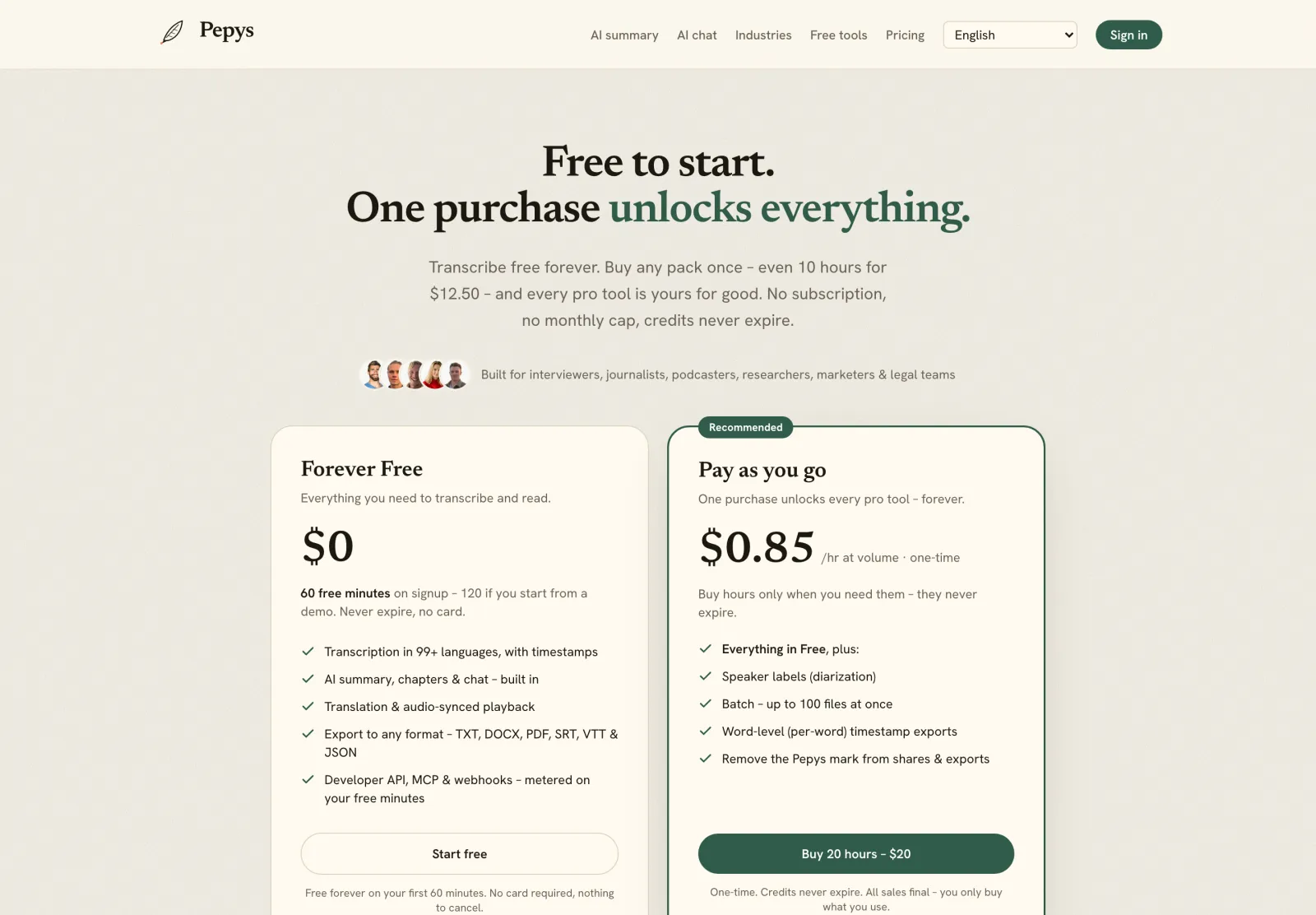
The idea is simple. You buy transcription minutes once, and the credits never expire, so there's no seat to renew and nothing draining your card between projects. You spend when you have a recording and pay nothing when you don't. That fits project-based research and journalism better than a monthly plan built for steady, year-round use.
This is the gap in the market. The well-known subscription tools optimize for teams that transcribe every week, so their pricing rewards constant use. If your volume is lumpy – three interviews this month, none the next – a pay-once approach charges for exactly what you run. You keep speaker labels and timestamps, and export a file you own outright.
Choosing transcription without a subscription
The right choice comes down to volume, platform, and privacy. Consumers already spend an average of $219 a month on subscriptions they routinely underestimate (C+R Research, 2022). Cutting one more recurring charge is the easy win. Matching the tool to your actual work is the real decision.
Three rules of thumb. For a rare one-off where you'd rather not touch software, a per-minute human service like Rev or GoTranscript is simplest, as long as the recording is short. If you're always on a Mac and you'd rather keep recordings off the cloud, a one-time desktop app that transcribes locally is hard to beat.
For everything else, pay-once credits fit best. That's the case when your volume is irregular and you work across different devices. If you want an exportable, timestamped file without a monthly bill, minutes that never expire match how project work actually happens. Going subscription-free gives you three shapes of pricing, so pick the one that fits how you actually record.