What's the difference: verbatim vs clean verbatim?
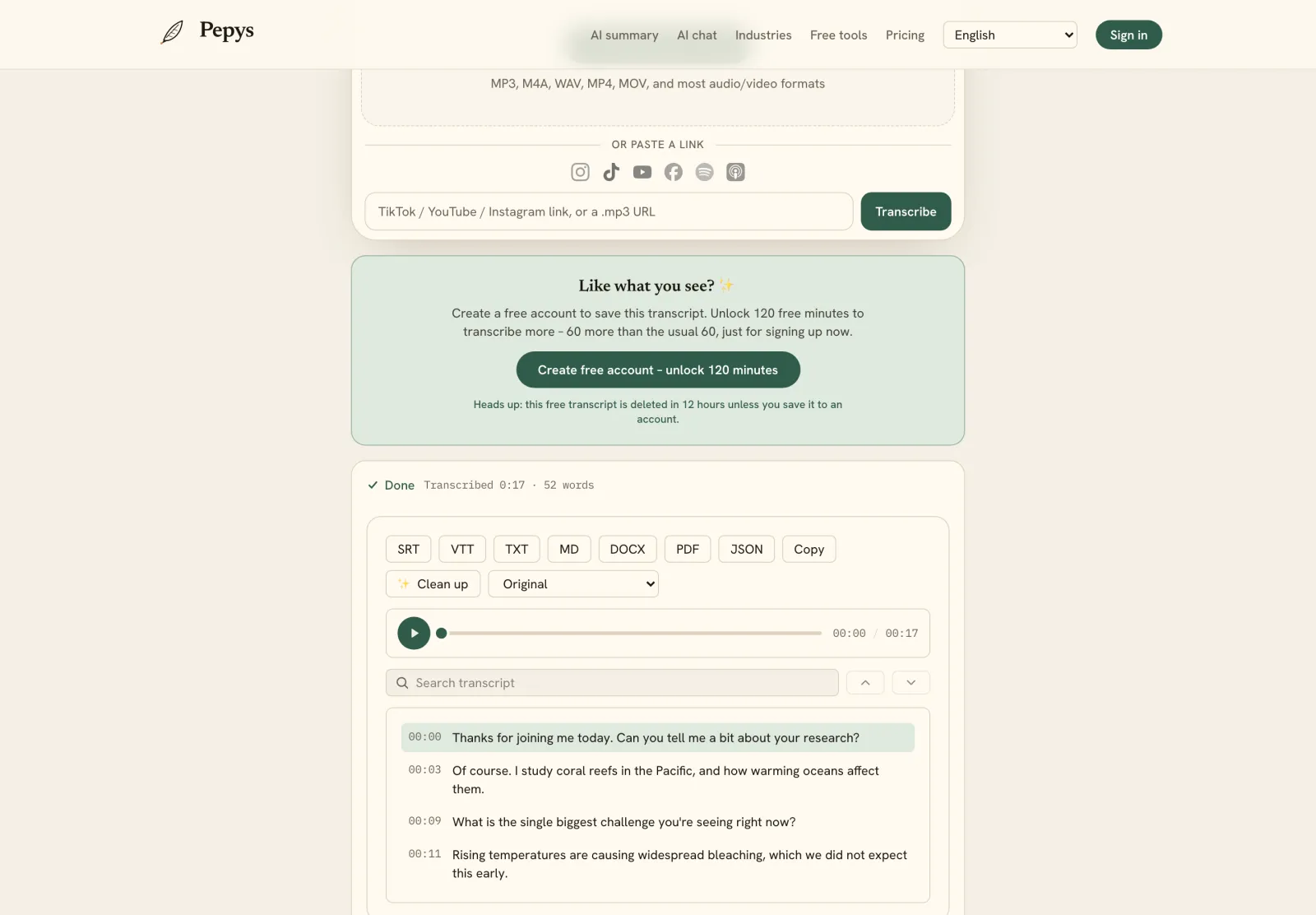
The split between verbatim vs clean verbatim comes down to noise. Strict verbatim keeps every 'um,' stutter, false start, and repetition on the page; clean verbatim keeps the speaker's exact words and meaning but strips that interview noise out, so the text reads clearly. Qualitative researchers frame the same split as naturalism versus denaturalism – capturing everything, or correcting grammar and removing stutters and pauses. If you code transcripts, that choice shapes your analysis, not just readability.
The two styles keep different things. Clean verbatim removes fillers ('um,' 'you know'), false starts, and stammers, but it does not rewrite what the person actually said. Strict verbatim leaves all of it in, because in some work how something was said is the evidence. Neither one is 'sloppy' – they answer different questions.
That interactional detail isn't decoration. A standard orthographic transcript bleaches out the timing of turns, changes in prosody, and volume – exactly what discourse and conversation analysis depend on. Strip it for a clean read and you've made a research trade-off, whether or not you meant to.
When should you use strict verbatim?
Use strict verbatim when how something was said is part of the record – legal proceedings, discourse and conversation analysis, or any quote that could be scrutinized word for word. Federal court proceedings, for instance, must be recorded verbatim by statute (28 U.S.C. 753). There's no editorial license to tidy them.
In court transcription the format is rigid too. The Judicial Conference's uniform transcript format is mandatory, and no deviation may be authorized – minor changes cause real monetary losses to the parties. If you're producing anything evidentiary, follow the strict rules for legal work rather than improvising.
Discourse and conversation analysts have their own reason. Gail Jefferson's transcription conventions – up-arrows for rising pitch, underlining for emphasis, capitals for volume, plus timing and overlap – are still the recognized system for capturing that detail. You can't analyze an interruption you deleted.
When is clean verbatim the right call?
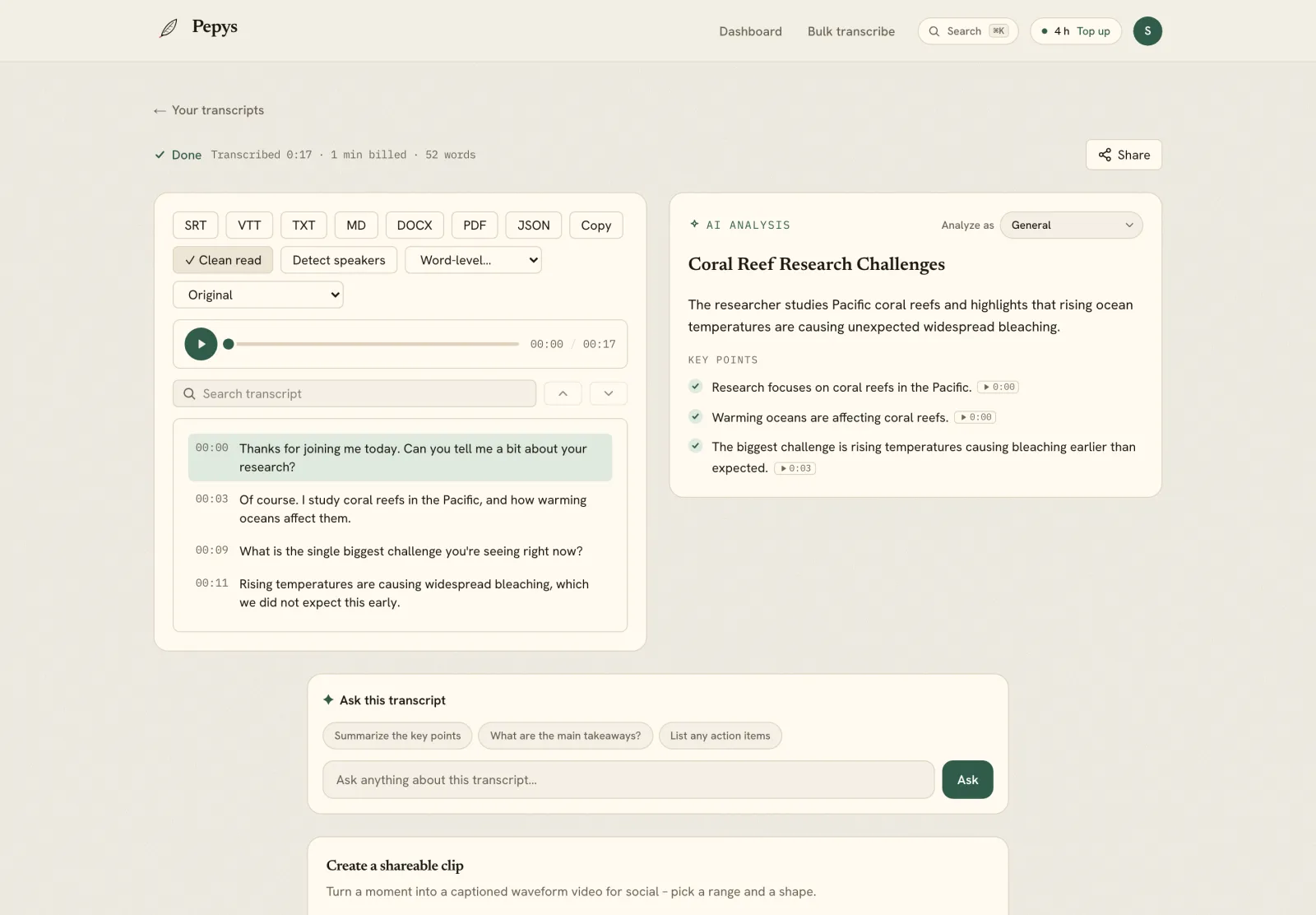
Clean verbatim is the default for journalism and most research writing, where the reader wants the point, not every stammer. You keep the speaker's words and meaning intact and drop the noise that makes a quote hard to read. For pulling attributable, quotable lines, it's usually what you want.
The rule that separates clean verbatim from distortion is integrity. Editing for readability is fine; changing meaning is not. Journalism ethics require that quotes not be taken out of context and that editing never alter the speaker's meaning. Cut the 'ums,' keep the substance – and never smooth a quote into saying something the person didn't.
When a source makes an actual error, don't silently fix it. Flag it with a bracketed sic immediately after the error, so it reads as the source's slip, not yours. That's the line between clean verbatim and rewriting – you remove noise, you don't correct the substance.
How do you choose between them?
Choose by your end use, not by habit. Ask one question: does the exact manner of speaking matter to your reader or your analysis? If yes – legal, discourse work, a contested quote – go strict verbatim. If you need readable, accurate quotes, clean verbatim wins. This decision sits inside the full record-to-clean workflow.
You don't have to pick one style for the whole file. Manual transcription runs up to six hours per hour of audio, so polishing a 90-minute interview end to end is wasted effort. Get a first-pass draft, then apply your chosen style only to the passages you'll actually quote or code.
Whatever you choose, be consistent within a project. Mixed styles make quotes hard to compare and, in research, muddy your coding. Decide the rule up front, write it down, and hold every quote to it – reviewers and fact-checkers will trust the result more.


