Start with a transcript, not the raw audio
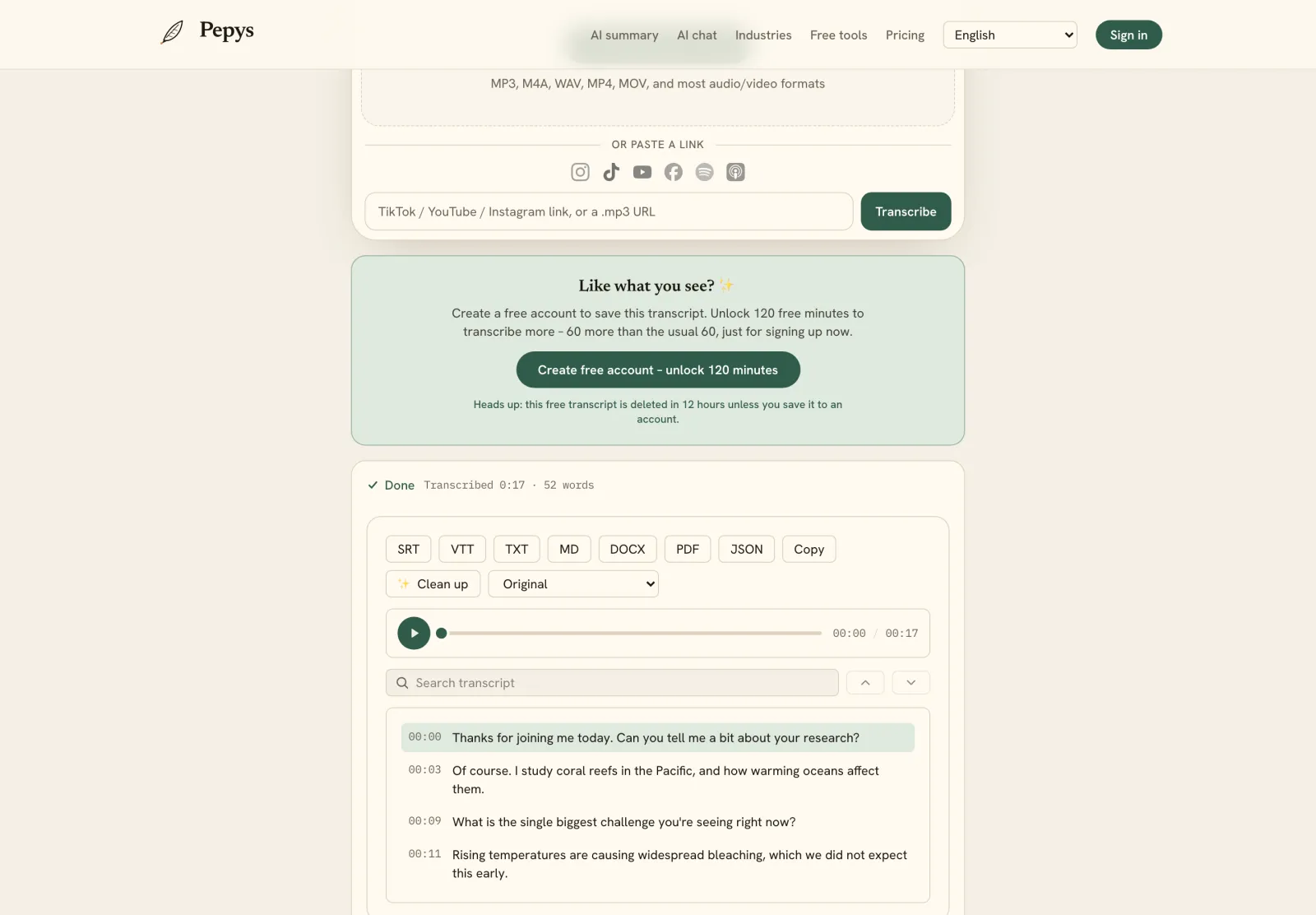
You can't shape a post from an audio file you keep scrubbing through. Get the words down first. Transcribing an hour of audio by hand runs up to six hours of work – most of a day for one episode. Run an AI first pass instead and spend your time editing. Start from a clean, speaker-labeled draft of the full episode, then build the post on top of it.
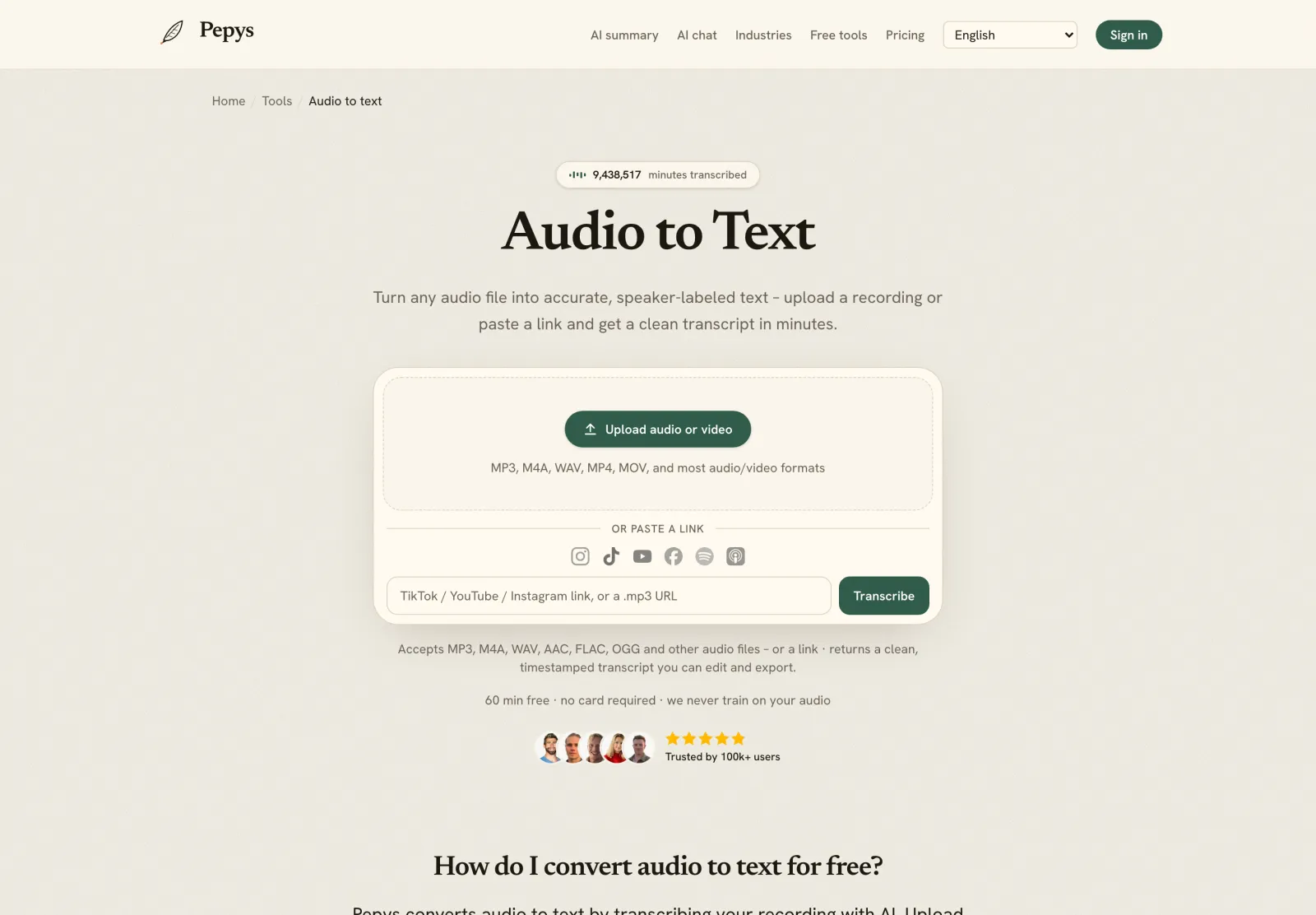
You don't need the audio file on your desktop to begin. If the episode is public, you can transcribe straight from its URL – paste the link and get a timestamped draft back. That's the fastest way to turn a just-released episode into a post while the topic is still fresh.
Keep the timestamps in the draft. When you quote a line later, you'll want to jump back to that exact second and hear it in context before it goes out. A timestamped transcript is your audit trail, not just a convenience.
Why a raw transcript won't rank as a post
Publishing the transcript verbatim is the fastest way to waste the episode. Google's spam policies flag scaled content abuse – pages made mainly to rank rather than help readers – and call out using AI tools "to generate many pages without adding value." A dumped transcript gives a reader nothing the audio didn't.
The post has to do something the episode doesn't. Give it a single argument, a clear structure, and context the conversation skipped. Reorder the raw talk into a line of reasoning, cut the tangents, and add the links, data, and headings a reader scanning the page actually needs. The transcript supplies the quotes and facts; the post supplies the shape.
A useful test: could a reader get more from your post than from listening at double speed? If not, you've transcribed, not written.
Pull quotes that are exact and attributable
Quotes are where a podcast post earns trust, and where it most easily goes wrong. Journalism ethics are blunt here: the SPJ Code of Ethics says quotations must not misrepresent and directs writers never to distort content or context. Pull the words as said, not as you remember them.
Tighten only within your verbatim style, never the meaning. You can drop an "um" or a false start, but if a source misspeaks – wrong year, wrong name – you keep it and flag it with a bracketed [sic], the standard signal that the error is theirs, not yours. Silent fixes are how a clean-looking quote becomes a correction.
Working from the timestamped transcript, lift each pull-quote exactly and note its timestamp so a fact-checker – or you, a month later – can re-hear it in seconds. Attribute every quoted line to the speaker by name; an unattributed quote reads as your words, not theirs.
How do you turn a podcast into a blog post from the transcript?
Drafting is where the value gets added, so treat the transcript as source material, not a first draft. Order the post around your angle, not the episode's chronology – the strongest point rarely comes first in a live conversation. A podcast-to-blog-post draft can give you a structured starting frame; the judgment about what matters stays yours.
Build the scaffolding a reader and a search engine both need: a headline that states the payoff, an intro that answers the question up front, H2s that break the argument into scannable chunks, and links out to the sources and data named on the episode. Weave the quotes in as evidence for your points, not as the points themselves.
Can you legally republish a guest's words?
This isn't legal advice, but the basics matter. Republishing a large chunk of someone else's podcast is a fair-use question, not an automatic right. The U.S. Copyright Office says fair use is decided case-by-case on four factors, including how much you use. A large portion makes fair use less likely; a small excerpt, more likely. Short, attributed pull-quotes sit far safer than a full transcript.
If it's your own show and you recorded the interview, consent to record is a separate question. Recording laws vary by state – federal law and most states allow one-party consent, but about 11 states require every party to agree. Get a clear yes on the record before the substance starts, and you're clear to quote from your own tape.