Pepys

Guide

How to transcribe a sales call

A working guide for reps, sales managers, and RevOps who need an accurate record of what a prospect actually committed to – not fuzzy after-call notes.

The short answer

To transcribe a sales call, get consent to record, then upload the audio to a transcription tool for a speaker-labeled, timestamped draft in minutes. Read it against the recording to fix names, prices, and product terms, then pull the objections, commitments, and next steps into your CRM. Keep the timestamps so every quoted commitment is re-checkable later.

Do you need consent to record a sales call?

Start with consent, because the recording is useless if you obtained it unlawfully. Federal law sets a one-party floor: under 18 U.S.C. § 2511, you can record a call you're a party to, or that one party consented to, as long as it isn't for a criminal or tortious purpose. That's the baseline, not the whole picture.

Roughly 11 states go further and require every party to agree, with several more requiring it for phone or in-person calls only. RCFP's Reporter's Recording Guide keeps the current list – California, Florida, Illinois, and Washington are among them. Treat it as the living source, because the counts shift.

Sales calls cross state lines constantly. When the people on the call sit in different states, assume the stricter state's law applies and get an explicit yes. The clean move: open with a plain line like "I'm recording this for my notes, is that okay?" and let the recording capture the answer. We can't give legal advice, but consenting on the record is the safe default.

Capture clean audio and separate the two sides

Your dialer or web-conferencing tool already records; the real question is whether it keeps the rep and the prospect on separate tracks. Per-side audio is the single biggest upgrade to speaker labeling, because the tool isn't guessing who spoke when two voices land at once.

Diarization (speaker labeling) is what turns a wall of text into rep-said and prospect-said turns – and it matters more when a buying committee puts three people on the line. Overlapping speech is its hardest case: crosstalk is a leading source of diarization error, and discovery calls are full of interruptions. Separate channels sidestep most of it.

If you can only get a single mixed file, that's fine. You'll still get speaker labels; just expect to correct more turns by hand around the moments where you and the prospect talk over each other.

Why an AI first pass is the fastest way to transcribe a sales call

Transcribing by hand runs four to six times the audio length – up to six hours for a single recorded hour. No rep is doing that after every call. An AI first pass turns an hour of audio into a few minutes of processing plus a short, focused cleanup.

Where the machine still needs you: product names, the price quoted, competitor names, acronyms, and numbers said fast. These are the load-bearing details a deal turns on, so a misheard price can quietly poison the whole record. Spend your attention on the 5% that decides the deal, not on retyping the rest.

If a passage is genuinely unclear in the audio, bracket it with its timestamp rather than guessing. A flagged gap is honest; a confidently wrong "commitment" is a forecast built on sand.

Pull the objections, commitments, and next steps

A sales-call transcript earns its keep in four places: the objection the prospect actually raised, the commitment they made, the next step you agreed, and the exact words behind your forecast. Pull those as verbatim quotes, not paraphrase. "We can't sign before Q3 budget opens" is a different deal than "they're worried about timing."

Keep timestamps on every line you pull. When a deal slips, or a manager asks why you called it committed, you jump to 18:40 and hear the prospect say it – rather than argue from memory. The timestamp is your audit trail.

Feed the cleaned quotes into your CRM notes and your deal review. The words a buyer used for their own problem are usually the words that move the next similar prospect. A verbatim record is voice-of-customer research you already paid for.

File it as a deal record, and mind where the audio lives

Export the cleaned transcript to a durable format for the deal file. DOCX drops straight into an account plan or a deal-review doc with timestamps intact, so whoever inherits the account can read what was actually said, not a summary of a summary.

Privacy is not optional here. If the prospect is an identifiable person in the EU, recording their voice is processing personal data, and GDPR requires a lawful basis – consent is the common one, though legitimate interest can also apply. Use a tool that doesn't train AI on your calls and lets you delete the audio after processing. Pepys never trains on your audio or transcripts, and you can auto-delete files once they're done.

Sales-call volume is lumpy: a heavy discovery week, then a quiet stretch. Pay-once pricing where credits never expire fits that rhythm better than a monthly seat you underuse between pushes, and it means the quiet weeks cost you nothing.
The steps, in order

  1. 01

    Get consent on the record

    Open the call by stating you're recording and get a clear yes captured in the audio. For calls crossing state lines, default to all-party consent to stay on the safe side.

  2. 02

    Record with the two sides separated

    Use your dialer or conferencing tool's per-channel recording so the rep and prospect stay on separate tracks. Separated audio makes speaker labeling far cleaner during crosstalk.

  3. 03

    Upload it for an AI first pass

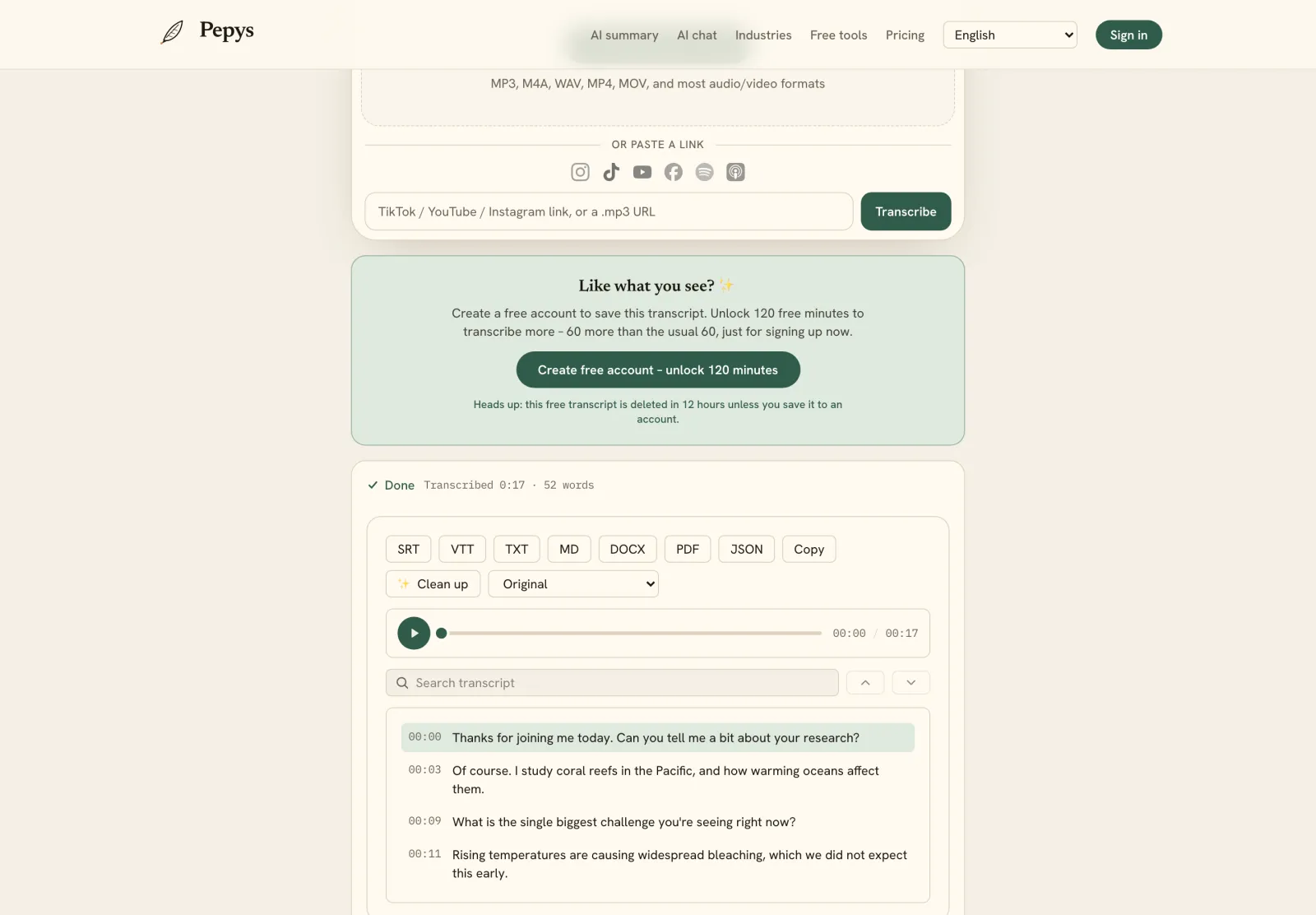
    Drop the file (or paste a link) to get a speaker-labeled, timestamped draft in minutes instead of spending most of a day typing it out by hand.

  4. 04

    Read the draft and fix the load-bearing details

    Skim for the spots AI struggles with: product names, prices, competitor names, and fast numbers. Mark anything unclear as inaudible with its timestamp rather than guessing.

  5. 05

    Pull commitments and next steps into your CRM

    Copy the objections, commitments, and agreed next steps as verbatim quotes with their timestamps, then export a DOCX record for the deal file and store it securely.

Tips from people who do this a lot

  • Per-channel recording (separate rep and prospect tracks) is the single biggest upgrade to speaker labeling – more than any setting in the transcription tool.

  • Open every call with the same consent line so the yes is always captured in the audio; a saved recording of the consent beats a note that says you asked.

  • Don't clean the whole transcript. Polish only the objections, commitments, and next steps you'll act on; the rest just needs to be searchable.

  • Build a timestamp index of every commitment as you read, so deal reviews jump straight to the moment the prospect said it instead of re-listening to the call.

  • For any call where participants sit in different states, assume the stricter state's consent law applies and get an explicit yes before the substance starts.

Try it now

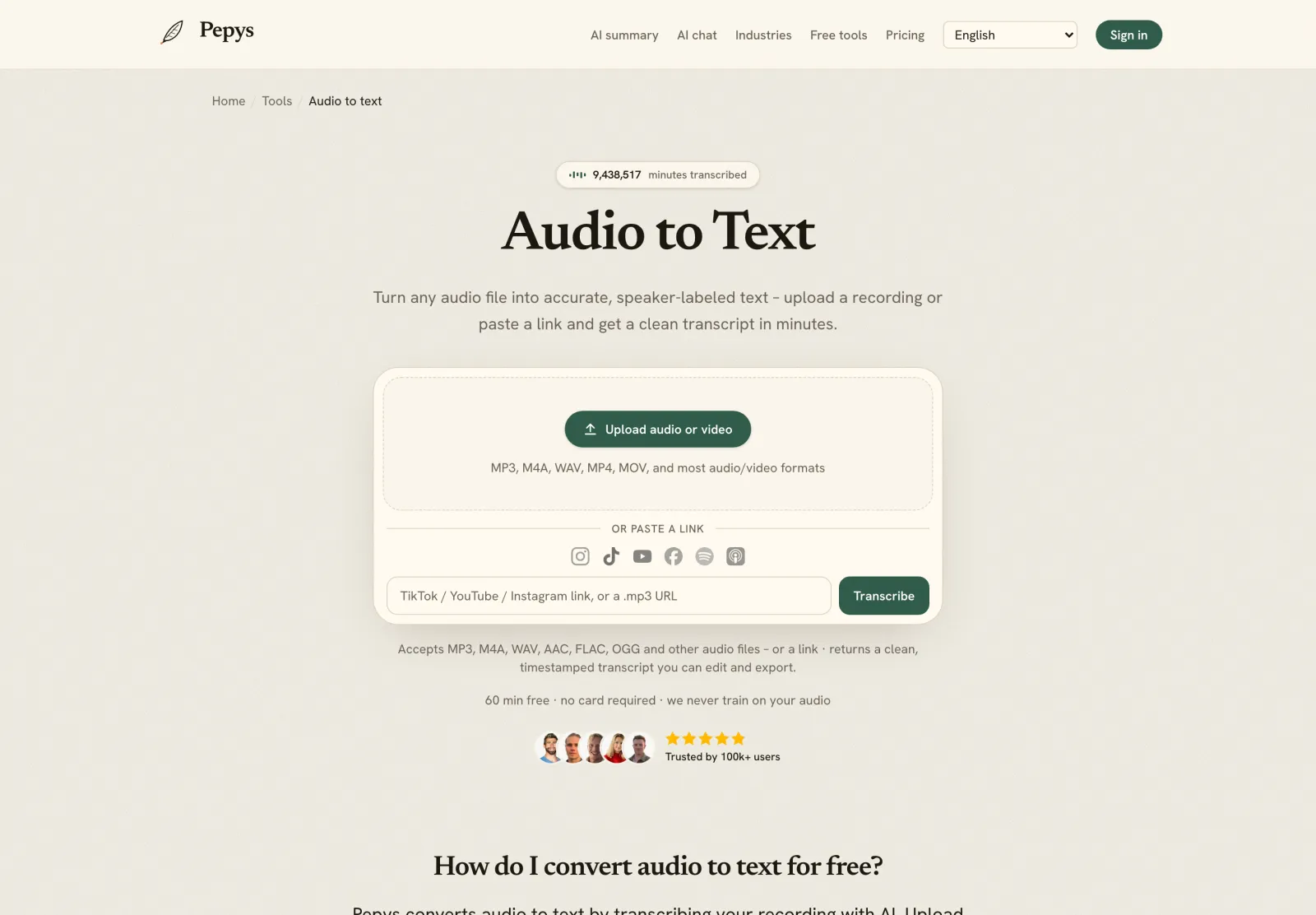
Drop in your recording or paste a link and get a clean, speaker-labeled transcript in minutes. Your first 60 minutes are free.

or paste a link
InstagramTikTokYouTubeFacebookSpotifyApple Podcasts

60 min free · no card required · we never train on your audio

PodcasterJournalistContent creatorResearcherStudent
Trusted by 100,000+ creators, podcasters, journalists & researchers

Transcribe a sales call – questions, answered

Is it legal to record and transcribe a sales call?

Get consent, ideally captured in the recording. Federal law allows one-party consent, but around 11 states require every party to agree, and interstate calls should default to the stricter law. We can't give legal advice, but asking and getting a clear yes on the record is the safe default before the substance starts.

How do I label who said what, rep versus prospect?

Record each side on a separate channel where your dialer or conferencing tool allows it, so the transcriber isn't guessing during crosstalk. With a single mixed file you'll still get speaker labels, but expect to fix more turns by hand around overlapping speech, which is diarization's hardest case.

What's the fastest way to transcribe a sales call?

Get an AI first pass, then clean by hand. Upload the recording to get a speaker-labeled, timestamped draft in minutes, then fix only the names, prices, and commitments that matter. That's far faster than typing from scratch, which runs four to six times the audio length.

Should I transcribe the whole call or just the key moments?

Transcribe the whole call, but only clean the parts you'll act on: objections, commitments, next steps, and the exact words behind your forecast. Pull those as verbatim quotes with timestamps for the CRM and deal review, and leave the rest as a searchable record you can jump back into.

Will my call audio be kept or used to train AI?

Not with Pepys. We never train AI on your audio or transcripts, and you can auto-delete files after they're processed. That matters when a call includes a prospect's personal data, since recording an identifiable EU person's voice needs a lawful basis under GDPR.

References

  1. 1.18 U.S.C. § 2511 – federal one-party-consent baseline for intercepting communicationsCornell Law School (Legal Information Institute)
  2. 2.Reporter's Recording Guide – all-party consent states and the interstate 'stricter law applies' ruleReporters Committee for Freedom of the Press
  3. 3.Haberl et al. (2023), Take the aTrain – manual transcription time cost, citing Bell et al. (2018)arXiv / University of Graz
  4. 4.GDPR Article 6 – lawfulness of processing and the consent basis (Regulation (EU) 2016/679)gdpr-info.eu
  5. 5.DIHARD II analysis (arXiv:2002.12761) – overlapping speech as a leading source of diarization errorarXiv

Keep reading

Don't just take our word for it.

Ask ChatGPT, Claude, or Perplexity what Pepys is and who it's for. One click, and your favorite AI does the homework.

Get your transcript – free to start

Pay as you go – credits never expire, nothing to cancel. Or start free with 60 minutes, no card.