Pepys

Guide

How to write meeting minutes from a recording

A working guide for anyone who records the meeting and writes formal minutes afterward – decisions, action items, and owners, without a bot on the call.

The short answer

To write meeting minutes from a recording, record the meeting yourself, then upload the saved file for a speaker-labeled transcript – no bot joins the call. From the transcript, draft structured minutes: attendees, agenda, and each decision with its action items and owners. Under Robert's Rules, minutes record what was done, not what was said. The draft becomes official once members approve it, usually at the next meeting.

What goes into meeting minutes?

Minutes are a record of decisions, not discussion. Under Robert's Rules of Order – the most widely used manual of parliamentary procedure in the US – minutes capture what was done at a meeting, not what was said. That one rule saves you hours: you're logging outcomes, not transcribing argument.

The formal skeleton has three parts. The opening states the kind of meeting, the organization's name, and the date, time, and place. It also notes whether the regular presiding officer and secretary were present, and whether the previous minutes were approved. The body records each main motion, the name of the mover, and its disposition. The closing gives the hour of adjournment – it's the last paragraph of the minutes.

Most business and board minutes add a few practical fields on top of that skeleton: attendees, the agenda items covered, each decision reached, and the action items. Give every action item an owner and a due date. Keep the whole thing structured and skimmable – whoever reads it in six weeks wants the decisions and their owners fast, not a narrative.

Why start from a recording instead of a bot?

Because you keep control of the audio. A meeting-notes bot joins the call live, sits on the participant list, and can miss the opening or drop mid-meeting. Recording the meeting yourself and uploading the saved file afterward avoids all of that. It's the record-it-yourself, upload-after wedge that keeps sensitive discussion off a third-party bot.

Capture the audio however the meeting happens. In a room, a single recorder on the table works. On a call, most platforms let you save a local recording, and Zoom can save a separate track per participant, which makes speaker labels far cleaner. The point is the same: end the call with a file you own, not a transcript trapped in someone else's tool.

Then let software do the first pass. Typing minutes from a raw recording is slow – manual transcription of one hour of audio can take up to six hours of work. An automatic transcript turns that into minutes of processing plus a focused edit, which is the difference between minutes filed same-day and minutes that slip a week.

How do you turn the recording into minutes?

Build the minutes from the transcript, not from memory. Upload the saved recording for a speaker-labeled, timestamped transcript, then draft structured minutes – summary, decisions, and action items from it and edit down. Working from the transcript means every decision traces back to a line you can replay.

Verify the load-bearing lines against the audio. Automatic speech-to-text is fast but not infallible. In one study, roughly 1% of transcriptions contained entire hallucinated phrases, and 38% of those hallucinations carried explicit harms. So confirm every name, figure, and recorded decision against the recording before the minutes go in the book. Timestamps make that a ten-second check, not a re-listen.

Cut the draft down to what was decided. A transcript is everything said; minutes are only what was done. Strip the small talk and the debate, keep the motions and their outcomes, and turn every 'we should…' into an action item with a name attached. If nothing was decided on an agenda item, that's a one-line note, not three paragraphs of who-said-what.

Getting decisions and action items right

This is where minutes earn their keep. Robert's Rules records each main motion with its mover and disposition – proposed, seconded, carried, or lost. For everyday business minutes, the same discipline applies to decisions: state what was decided, and who owns the follow-up and by when.

Write action items so they survive the next six weeks. 'The team will circulate the budget' ages into an argument about who and when. 'Priya sends the Q3 budget to the board by July 12' doesn't. Every action item wants a verb, an owner, and a date – that's what turns minutes from a record into a follow-up tool.

Resist the urge to summarize debate. It feels helpful to note that 'several members raised concerns,' but Robert's Rules keeps minutes to decisions, not the arguments behind them for a reason. Paraphrased argument invites disputes about accuracy and puts opinions on the permanent record. Log the decision, not the deliberation.

Approving, correcting, and filing the minutes

A draft isn't the official record until members approve it. Under Robert's Rules, minutes are normally read and approved at the start of the next regular meeting, right after the call to order. Until that vote, what you've written is a draft, however polished.

Corrections happen at approval, in the text. Say someone catches a wrong figure or a misattributed motion when the minutes come up for approval. The fix is made directly in the text, and the minutes are approved 'as corrected'. You don't keep a running list of errata. The corrected version is the one that goes in the book.

Two housekeeping points. First, get consent to record on the record. Federal law requires at least one party to consent, while about 11 states require all parties, so ask for a clear yes before the substance starts. Second, mind where the recording lives afterward: keep it as your backup until the minutes are approved, then delete it if the discussion was sensitive.
The steps, in order

  1. 01

    Record the meeting yourself

    Capture the room or call audio to a file you own, and get consent on the record. No bot needs to join the meeting.

  2. 02

    Upload the saved recording

    Drop the file in for a speaker-labeled, timestamped transcript instead of typing from the audio for hours.

  3. 03

    Draft structured minutes from the transcript

    Generate a first draft with attendees, agenda, decisions, and action items, then cut it down to what was actually decided.

  4. 04

    Verify decisions and action items against the audio

    Check every decision, name, number, and owner against the recording. Automatic transcripts can fabricate text, so confirm the load-bearing lines.

  5. 05

    Assign owners and due dates

    For each action item, record who owns it and by when, so the minutes drive follow-up instead of just documenting it.

  6. 06

    Circulate, correct, and approve

    Send the draft, log corrections in the text, and approve at the next regular meeting. The approved version is the official record.

Tips from people who do this a lot

  • Write 'done, not said.' Record the motion, who moved it, and how it ended – skip the back-and-forth of debate, which isn't minutes and only invites disputes.

  • Record the room, not just the platform. A saved local file beats relying on a live bot that may miss the first five minutes or drop mid-call.

  • Verify every name, number, and decision against the audio. Automatic transcripts occasionally invent text that was never spoken, and a wrong figure in the official record is hard to walk back.

  • Put an owner and a due date on every action item. 'The team will follow up' is useless in six weeks; 'Dana sends the budget by Friday' is auditable.

  • Don't approve the draft alone. Minutes aren't official until members approve them, so circulate first and log corrections in the text as 'approved as corrected.'

Try it now

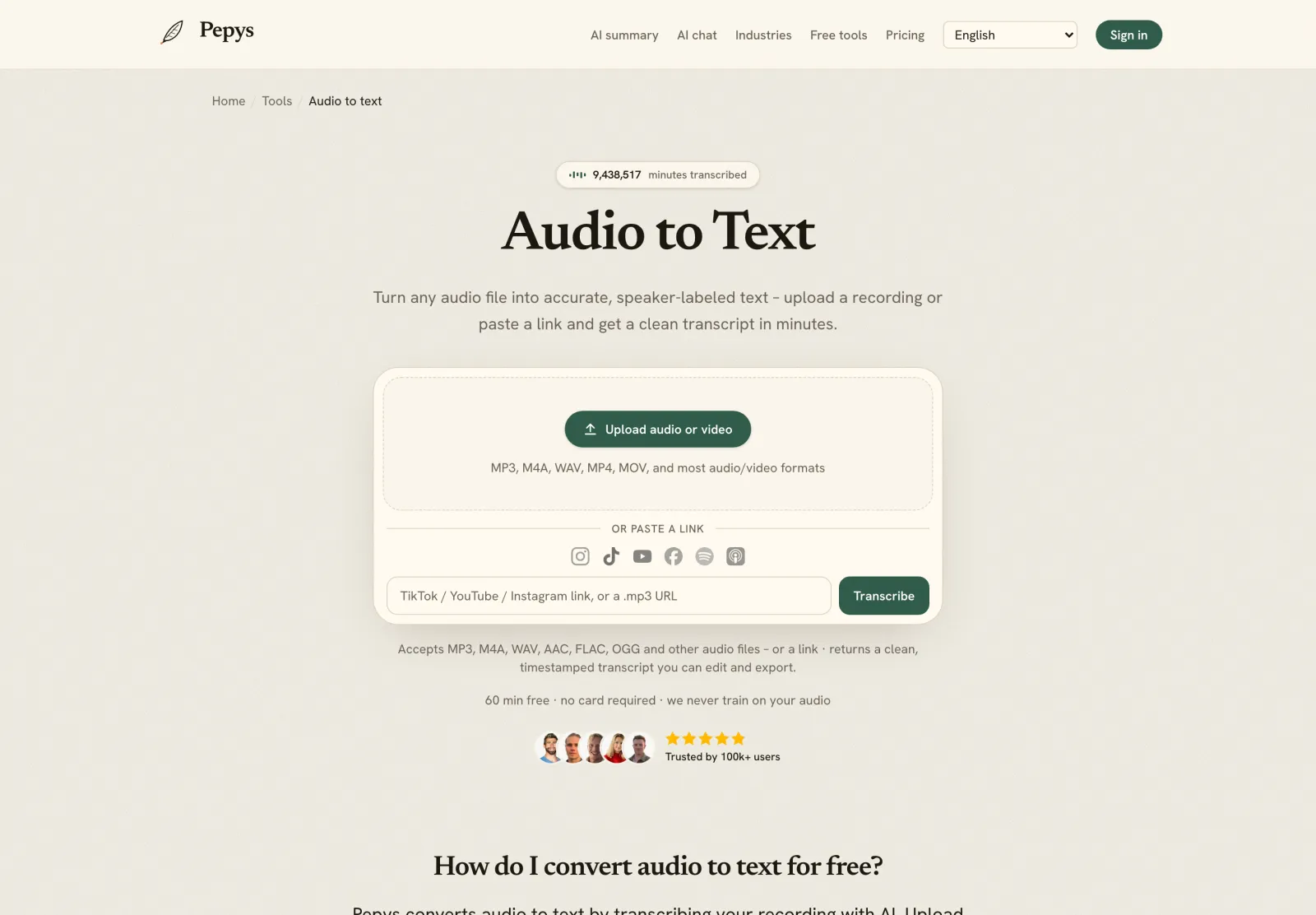
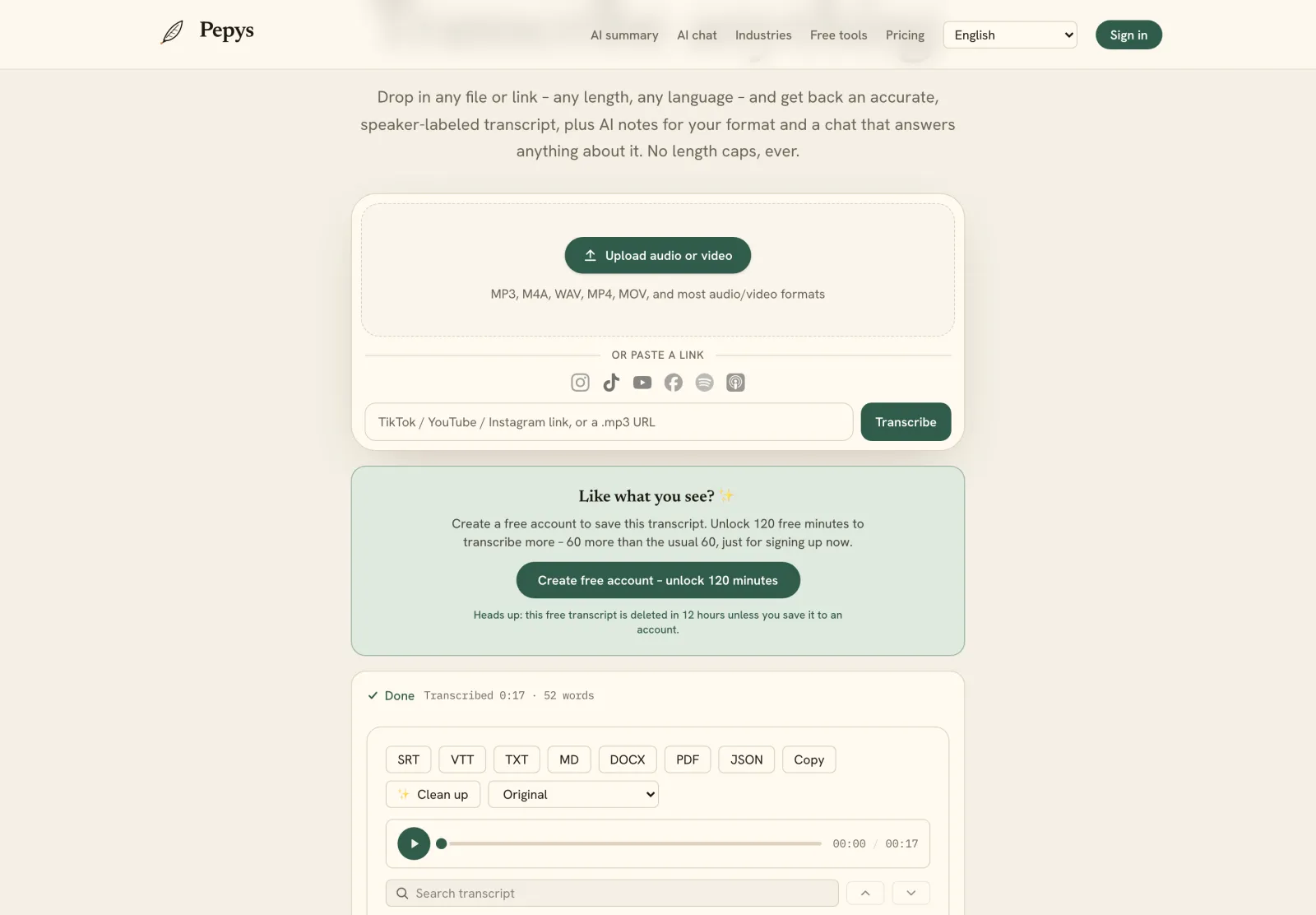
Drop in your recording or paste a link and get a clean, speaker-labeled transcript in minutes. Your first 60 minutes are free.

or paste a link
InstagramTikTokYouTubeFacebookSpotifyApple Podcasts

60 min free · no card required · we never train on your audio

PodcasterJournalistContent creatorResearcherStudent
Trusted by 100,000+ creators, podcasters, journalists & researchers

How to write meeting minutes from a recording – questions, answered

What must meeting minutes include?

Under Robert's Rules, the opening states the kind of meeting, the organization, the date, time, and place. It also notes whether the regular presiding officer and secretary were present, and whether prior minutes were approved. The body records each main motion, its mover, and how it was resolved. The last line gives the hour of adjournment.

Do minutes record the discussion?

No. Robert's Rules is explicit that minutes are a record of what was done, not what was said, so summarizing the debate is improper. Record motions, decisions, and their disposition, plus action items and owners. Leave out the argument, the personalities, and who leaned which way.

When do minutes become official?

Not until members approve them. A draft is just a draft; minutes are normally read and approved at the beginning of the next regular meeting. Corrections raised at approval are made in the text, and the record is then approved 'as corrected.' The approved version is the official one.

Can I use a bot to take the minutes instead?

You don't need one. Instead of a bot that joins the call live, record the meeting yourself and upload the saved file afterward for a transcript you build the minutes from. That keeps the audio in your hands and avoids a bot appearing on the participant list.

Is it legal to record the meeting?

Get consent on the record first. Federal law requires at least one party to consent, but about 11 states require every party to agree, so laws vary by where participants sit. This isn't legal advice; asking for a clear yes before the substance starts is the safe default.

References

  1. 1.Robert's Rules of Order – Frequently Asked Questions (minutes record what was done; decisions not arguments)Official Robert's Rules of Order Website
  2. 2.Minutes content – a record of what was done, not said (RONR 12th ed. § 48:2)Michigan State University, Academic Governance
  3. 3.Robert's Rules, 'The Officers and the Minutes' – required components, adjournment, and approval timing (RONR sec. 48)Westside Toastmasters (reproduction of Robert's Rules)
  4. 4.About the NAP – RONR is the most common parliamentary authority in use todayNational Association of Parliamentarians
  5. 5.Haberl et al. (2023), Take the aTrain – manual transcription time, citing Bell et al. (2018)arXiv / University of Graz
  6. 6.Koenecke et al. (2024), Careless Whisper: Speech-to-Text Hallucination Harms (ACM FAccT '24)arXiv / ACM FAccT
  7. 7.Introduction to the Reporter's Recording Guide (federal one-party baseline; all-party states)Reporters Committee for Freedom of the Press

Keep reading

Don't just take our word for it.

Ask ChatGPT, Claude, or Perplexity what Pepys is and who it's for. One click, and your favorite AI does the homework.

Get your transcript – free to start

Pay as you go – credits never expire, nothing to cancel. Or start free with 60 minutes, no card.